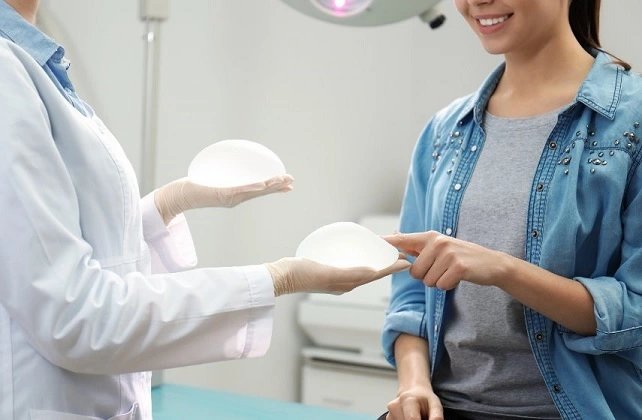
Breast enlargement involves inserting implants to increase, reshape, or even out the breasts
It's also known as breast augmentation, or a 'boob job'
It's a big decision — it's major surgery, results aren't guaranteed, and there are risks
It's not usually available on the NHS, except in specific circumstances
Implants don't last a lifetime and are likely to need replacing eventually
About Breast Enlargement
Breast enlargement involves inserting implants into the breasts to increase their size, change their shape, or make them more even — also known as breast augmentation, or informally a "boob job." It's a significant decision: it's major surgery, results can't be guaranteed, and there are risks worth thinking through carefully beforehand.
Breast enlargement isn't usually available on the NHS, and you'll typically need to pay privately — costs in the UK are generally around £3,500 to £8,000, not including consultations or follow-up care, and any future revision surgery would also need to be paid for separately. In some circumstances, such as very uneven breasts or an absence of breast tissue, NHS funding may be possible depending on local policy — a GP can advise on the rules in your area.
Page last reviewed: 6 March 2024 · Next review due: 6 March 2027
Breast Enlargement · Procedure
Choosing Implants and What's Involved
? 5 min readReviewed: March 2024
Choosing Your Implants
There are two main types of implant: silicone, the most commonly used in the UK, which feels natural and is less likely to wrinkle, though it can occasionally spread into breast tissue and cause lumps; and saline, more likely to fold, rupture, or gradually deflate over time, though the saline itself is safely absorbed by the body if this happens. Your surgeon can talk through the pros and cons of each, along with implant size, shape, and whether they'll sit in front of or behind the chest muscle. Implants don't last a lifetime, and many people need further surgery after around 10 years, either because of implant issues or changes in the breast tissue around them.
The Operation
Breast implant surgery is usually carried out under general anaesthetic. It involves a cut in the skin near or below the breast, positioning the implant either between breast tissue and chest muscle or behind the chest muscle, then stitching and dressing the wound. The operation takes 60 to 90 minutes, and you may go home the same day or need an overnight stay, with pain relief available for any discomfort afterwards.
Page last reviewed: 6 March 2024 · Next review due: 6 March 2027
Breast Enlargement · Recovery
Recovering from Breast Enlargement
? 4 min readReviewed: March 2024
What to Expect
You should be able to move around soon after surgery, though full recovery can take a few weeks — most people take 1 to 2 weeks off work, and shouldn't drive for at least a week. Some surgeons recommend wearing a sports bra continuously for up to 3 months (check with your surgeon), and it's best to avoid heavy lifting or strenuous exercise for at least a month.
Stitches (unless dissolvable) are usually removed after 1 to 2 weeks, most normal activities can resume by around 6 weeks as scars start to fade, and breasts typically look and feel more natural after a few months, at which point a sports bra may no longer be needed. It's generally safe to sunbathe and fly after breast implants.
Page last reviewed: 6 March 2024 · Next review due: 6 March 2027
Breast Enlargement · Risks
Risks and Implant Safety
? 5 min readReviewed: March 2024
Possible Complications
Breast implants can occasionally cause thick scarring, hardness from scar tissue shrinking around the implant (capsular contracture), a ruptured implant (needing removal), creases or rippling in the implant, the implant rotating and causing an abnormal shape, temporary or permanent changes in nipple sensation, or slightly reduced milk production if breastfeeding afterwards. As with any operation, there's also a small risk of bleeding, blood clots, infection, or an allergic reaction to medicines used during surgery.
Other Safety Considerations
There's a recognised, though uncommon, association between breast implants and a rare immune system cancer called breast implant associated anaplastic large cell lymphoma (BIA-ALCL). Some people also report symptoms such as tiredness, anxiety, or joint pain after implants, sometimes referred to as breast implant illness — further government guidance is available on both. PIP implants, banned in the UK in 2010 due to a higher rupture risk, need specific medical follow-up if you have them; speak to a GP or the clinic where you had surgery.
The UK's Breast and Cosmetic Implant Registry (BCIR) records details of anyone with breast implants, so they can be traced if a safety concern arises with a specific type. It's still important to check your breasts regularly and attend routine breast screening after implants — mammograms are safe and won't cause rupture, though it's worth telling staff you have implants beforehand, since imaging may need to be adapted.
If Something Goes Wrong
Contact your clinic promptly if you have unexpected pain or symptoms such as burning, unusual swelling, or skin colour changes. Implant problems can be reported through the government's Yellow Card Scheme. If you're unhappy with your results, speak to your surgeon first, and contact the CQC or GMC with any further concerns.
Page last reviewed: 6 March 2024 · Next review due: 6 March 2027