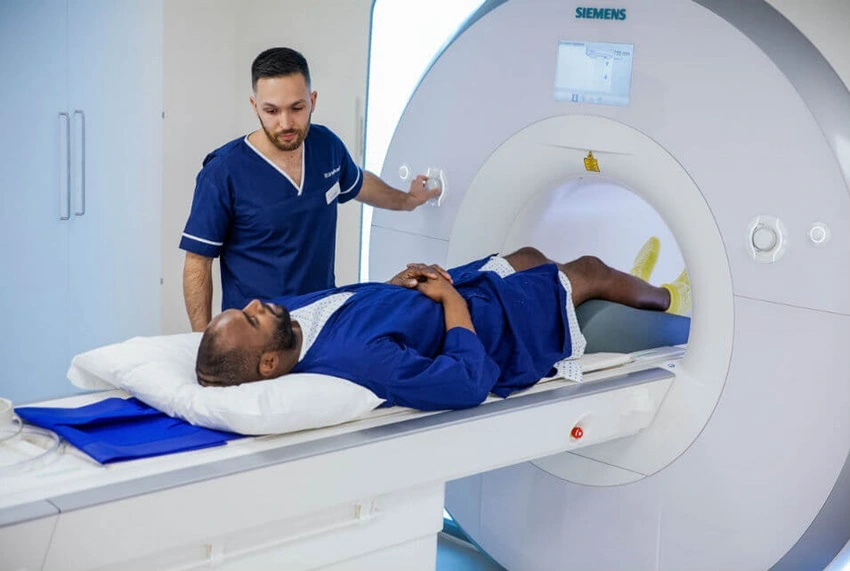
A CT scan uses X-rays and a computer to create detailed images of the inside of the body
It's used to diagnose conditions, guide procedures, or check how well a treatment is working
It's more detailed than a standard X-ray, showing bones, organs and soft tissue clearly
The scan itself is painless and usually takes between 10 and 30 minutes
It's not typically used to screen for problems in people without symptoms
About CT Scans
A CT (computerised tomography) scan uses X-rays together with a computer to build detailed, three-dimensional images of the inside of the body, showing bones, organs, blood vessels and soft tissue far more clearly than a standard X-ray.
It's commonly used to diagnose conditions such as bone damage, internal organ injuries, blood flow problems, strokes or cancer, and can also help guide other procedures — for example, planning radiotherapy, or guiding a needle biopsy. It's sometimes used to monitor how a condition is responding to treatment, such as tracking the size of a tumour. CT scans aren't generally used to check for problems in people with no symptoms, since the potential benefits of this kind of screening don't usually outweigh the risks involved.
Page last reviewed: 6 March 2024 · Next review due: 6 March 2027
CT Scan · Procedure
What Happens During a CT Scan
? 4 min readReviewed: March 2024
Getting Ready
Your appointment letter will explain if there's anything specific you need to do to prepare. You'll usually be asked to remove anything containing metal, such as jewellery, hair clips, or clothing with zips or poppers, and may be given a hospital gown to change into.
If you feel anxious about the scan, or have a fear of enclosed spaces, it's worth mentioning this to a doctor beforehand — they may be able to offer something to help you relax, or let you bring someone along for support.
During the Scan
You'll lie on a flat bed that moves slowly through the CT scanner, a large, ring-shaped machine, while it takes images from different angles. It's important to stay still throughout so the pictures come out clear. The scan itself is completely painless and typically takes between 10 and 30 minutes.
Some scans use a contrast dye, given as a drink, an injection, or occasionally an enema, to make certain areas of the body — such as blood vessels or the digestive system — show up more clearly. If you have the injection, you might feel warm, or notice an unusual sensation, but this passes quickly.
Page last reviewed: 6 March 2024 · Next review due: 6 March 2027
CT Scan · Risks
Risks of a CT Scan
? 3 min readReviewed: March 2024
Weighing Up the Risks
CT scans use X-rays, so they involve a small amount of radiation exposure. The level used is kept as low as possible while still producing a clear image, and the potential slight increase in long-term cancer risk from a single scan is considered very small — doctors always weigh this against the benefits before recommending a scan, and can talk through any concerns you have beforehand.
It's important to tell the hospital if you're pregnant, since CT scans aren't usually recommended during pregnancy unless it's an emergency. Complications are otherwise rare — some people have an allergic reaction to the contrast dye, which can cause symptoms like weakness, sweating or breathing difficulty, so you may be asked to wait at the hospital for a short time after your scan if you've had contrast.
Page last reviewed: 6 March 2024 · Next review due: 6 March 2027
CT Scan · Results
Getting Your CT Scan Results
? 3 min readReviewed: March 2024
What Happens Next
A radiologist will study your images and write to the doctor who referred you for the scan. You may need a follow-up appointment to go through your results, and it's worth contacting the referring doctor if you haven't heard anything within around four weeks. They should explain what the results mean and whether any further tests are needed — don't hesitate to ask a healthcare professional if anything about your results isn't clear.
Page last reviewed: 6 March 2024 · Next review due: 6 March 2027