Dentures are removable false teeth that replace one, several, or all of your teeth
They fit over the gums, and some types clip onto remaining natural teeth
They help with eating and speech, and can improve confidence about your smile
NHS dentures are available if a dentist decides they're the best option for your dental problem
Private dentures offer a wider choice of materials, at a higher cost
About Dentures
Dentures, commonly known as false teeth, are removable devices used to replace missing teeth. They sit over the gums, and depending on the type, may also clip onto any remaining natural teeth for extra stability.
Beyond restoring the ability to eat and speak comfortably, dentures can also help with confidence, since gaps from missing teeth can affect how people feel about their smile even when there's no functional problem. An NHS dentist will assess your teeth and let you know whether dentures are a suitable option, alongside alternatives such as bridges or dental implants.
Page last reviewed: 6 March 2024 · Next review due: 6 March 2027
Dentures · Types
Types of Denture
? 3 min readReviewed: March 2024
Full and Partial Dentures
A full (or complete) denture replaces all of the teeth in the upper jaw, lower jaw, or both, and is used when all natural teeth need to be removed, or to replace an existing full denture.
A partial denture fills the gaps left by one or more missing teeth, usually made from plastic, nylon or metal with false teeth attached, and often clips onto some remaining natural teeth using small metal clasps to hold it securely in place. It can be taken out and put back in as needed. A fixed bridge is sometimes offered as an alternative to a partial denture, depending on what's suitable for your particular situation.
Page last reviewed: 6 March 2024 · Next review due: 6 March 2027
Dentures · Fitting
Getting Dentures Made and Fitted
? 4 min readReviewed: March 2024
The Process
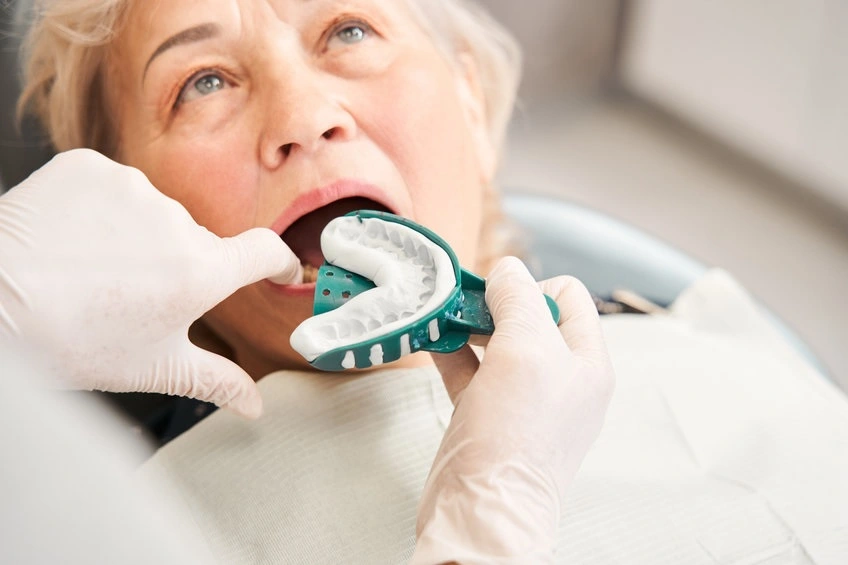
To make your dentures, the dentist first measures your mouth and takes an impression — either using a putty-like material or a digital scan. This is sent away to be made into your custom dentures, which usually takes a few weeks, after which you'll have a further appointment to have them fitted.
If you need replacement teeth quickly, or are adding to an existing partial denture, you may be offered "immediate dentures" that can be fitted sooner. Dentures may feel unusual to begin with, but most people adjust within a few weeks — your dentist or clinical dental technician will advise on how much to wear them at first, including whether to keep them in overnight in the early stages.
Page last reviewed: 6 March 2024 · Next review due: 6 March 2027
Dentures · Care
Looking After Your Dentures
? 3 min readReviewed: March 2024
Ongoing Care
Dentures need regular cleaning to remove plaque, food debris and staining, usually by soaking in a specialist cleaning solution alongside gentle brushing. As your mouth changes shape over time, dentures often need adjusting, relining, repairing, or eventually replacing, so keeping up with dental check-ups is worthwhile even after you've been fitted.
NHS dentures are generally available to anyone who needs them for a dental reason, with costs depending on the relevant NHS charge band, while private dentures offer a wider range of materials and finishes at a higher cost. Speak to your dentist about which option suits your circumstances and budget best.
Page last reviewed: 6 March 2024 · Next review due: 6 March 2027