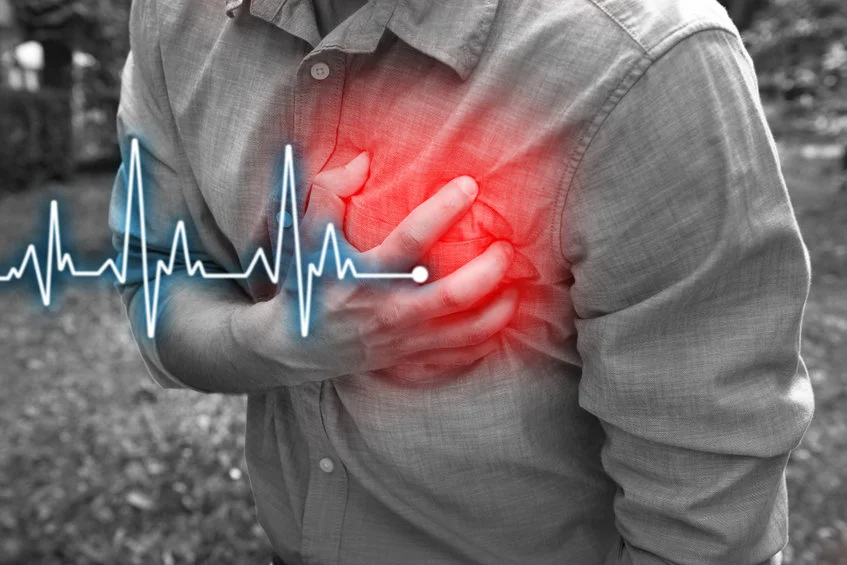
A heart attack happens when blood flow to the heart is blocked
It's life-threatening and needs emergency hospital treatment
Common symptoms include crushing chest pain, breathlessness, and feeling sick
Always call 999 if you suspect a heart attack
There are things you can do while waiting for help to arrive
About Heart Attacks
A heart attack happens when blood flow to the heart is blocked. It's life-threatening and needs emergency treatment in hospital. A heart attack is different from a cardiac arrest, where the heart suddenly stops beating and consciousness is lost — this is also life-threatening but needs different treatment; the British Heart Foundation has further information on cardiac arrest.
Symptoms
Symptoms of a heart attack can include chest pain that feels like crushing or squeezing, sometimes spreading to the arm, neck or jaw; breathlessness; feeling or being sick; a sensation like indigestion, with a burning feeling in the chest or a bloated, full feeling; sweating; and pale, blue or grey skin, which may be easier to spot on the palms on brown or black skin.
?? Call 999 if:
You have chest pain that feels tight or like squeezing, or that's spreading to the arms, neck or jaw; you're having severe difficulty breathing, gasping, choking, or unable to get words out; your lips or skin look pale, blue or grey (easier to see on the palms on brown or black skin); or someone has passed out and isn't responding normally. Do not drive yourself to A&E — the 999 call handler will advise you what to do.
?? Call NHS 111 if:
You're suddenly more short of breath than usual; you have chest pain and feel or are being sick; or you have chest pain alongside a racing, slow, skipping, or fluttering heartbeat.
While Waiting for Help
If you think you or someone else is having a heart attack, sit and rest on the floor in a comfortable position with knees bent and back supported, or on a chair if that's not possible. Take 300mg of aspirin if you have some available, unless there's a known aspirin allergy, and use a glyceryl trinitrate (GTN) spray if you have angina and it's with you. Keep checking that the person is still responding and breathing, and if they stop responding and stop breathing, start CPR straight away.
Page last reviewed: 6 March 2024 · Next review due: 6 March 2027
Heart Attack · Treatment
Diagnosis and Treatment
? 5 min readReviewed: March 2024
How It's Diagnosed
An electrocardiogram (ECG) and blood tests are used to check whether you're having a heart attack. If these confirm it, further tests may follow, including an echocardiogram to check for heart damage, or a coronary angiogram to pinpoint exactly where blood flow is blocked — the blockage may be treated during the same procedure. A doctor will explain what your results mean for you.
Hospital Treatment
Treatment for a heart attack takes place in hospital and depends on how severe it is. Options include medicines to treat the arterial blockage and improve blood flow to the heart, coronary angioplasty (using a small tube called a stent to open blocked arteries), or a coronary artery bypass, where arteries from elsewhere in the body are used to reroute blood around a blockage. A heart attack is life-threatening and can't always be successfully treated, and there's a chance it can be fatal.
Long-Term Medicines
After a heart attack, you'll usually be prescribed medicines to take long-term, treating the underlying causes and lowering the risk of a further heart attack. These can include antiplatelets to help prevent arteries becoming blocked, statins to lower cholesterol, and other medicines for high blood pressure, such as ACE inhibitors or beta-blockers.
Page last reviewed: 6 March 2024 · Next review due: 6 March 2027
Heart Attack · Recovery
Recovering from a Heart Attack
? 4 min readReviewed: March 2024
What to Expect
Heart attacks affect everyone differently — some people recover within a few weeks with little lasting impact, while for others, recovery takes months or years. Afterwards, you'll usually need to rest, including taking time off work, and will likely be referred to cardiac rehabilitation to support your recovery, which may be delivered in person, or remotely by video call or app.
Getting Back to Normal
Most people are able to return to their usual activities once recovered. It's common to feel anxious or worried about resuming everyday tasks or going back to work — if you're experiencing anxiety or low mood after a heart attack, talk to a GP, who can help connect you with support.
Page last reviewed: 6 March 2024 · Next review due: 6 March 2027
Heart Attack · Causes & Prevention
Causes and Reducing Your Risk
? 4 min readReviewed: March 2024
What Causes a Heart Attack
Heart attacks are usually caused by a blood clot blocking sufficient blood flow to the heart. You're more likely to have one if you smoke, have high blood pressure or high cholesterol, have a close relative who's had a heart attack, have diabetes, or are living with overweight or obesity.
Reducing Your Risk
A heart attack can't always be prevented, but lifestyle changes can help lower your risk. This includes stopping smoking, keeping cholesterol and blood pressure at healthy levels, eating a balanced diet with less salt and saturated fat, maintaining a healthy weight, exercising regularly, and cutting down on alcohol.
Getting Support
Connecting with others who've had a heart attack, whether locally or online, can offer valuable emotional support. The British Heart Foundation offers information and support for anyone affected by heart conditions, including local and online services, via their heart helpline on 0808 802 1234.
Page last reviewed: 6 March 2024 · Next review due: 6 March 2027