4th Floor 18 St Cross Street, London, EC1N 8UN 0800 1932273
Overview & symptoms Causes & prevention Tests & diagnosis Treatment Help & support
Melanoma skin cancer overview symptoms moles
Melanoma · Overview

About Melanoma and Its Symptoms

? 5 min readReviewed: March 2024
Key Points
  • Melanoma is a type of skin cancer that can spread to other areas of the body
  • The main cause is ultraviolet (UV) light, from the sun or sunbeds
  • Risk is higher with pale skin, lots of moles, and a family history of skin cancer
  • A new mole, or a change in an existing one, is often the first sign
  • Finding melanoma early generally makes it easier to treat

About Melanoma

Melanoma is a type of skin cancer that can spread to other areas of the body. The main cause is ultraviolet (UV) light, which comes from the sun and is also used in sunbeds. Factors that raise your chances of getting melanoma include your age, pale skin, having a large number of moles, and a family history of skin cancer. Skin cancer can often be prevented by taking care in the sun, such as using sunscreen and reapplying it regularly. How melanoma is treated depends on its location, whether it's spread, and your general health, with surgery being the main treatment.

There's also a more common and usually less serious type of skin cancer called non-melanoma skin cancer.

Symptoms

A new mole, or a change in an existing one, may be a sign of melanoma. Melanomas can appear anywhere on the body but are more common in areas often exposed to the sun; rarer types can affect the eyes, soles of the feet, palms, or genitals. It's worth checking your skin regularly for unusual changes, using a mirror or asking someone else to check areas you can't see yourself.

Normal moles are usually round with smooth edges, a single colour, and small — often no bigger than a pencil end. Melanomas, by contrast, often have an uneven shape or edges, a mix of two or more colours, and tend to be larger, often over 6mm wide (though they can be smaller if caught early). A mole that changes in size, shape or colour over time may be a melanoma, as can one that becomes swollen, sore, itchy, crusty, or starts bleeding.

When to See a GP

See a GP if you have a mole that's changed size, shape or colour; a mole that's painful, itchy, inflamed, bleeding, or crusty; a new or unusual mark on the skin (including palms or soles) that hasn't gone within a few weeks; or a dark area under a nail not caused by an injury. Finding melanoma as early as possible generally makes it easier to treat.
Page last reviewed: 6 March 2024  ·  Next review due: 6 March 2027
Melanoma causes UV light sun safety prevention
Melanoma · Causes & Prevention

Causes and Reducing Your Risk

? 5 min readReviewed: March 2024

What Causes Melanoma

Ultraviolet (UV) light is the most common cause of melanoma, coming from the sun and from sunbeds. It's more common in older people, though younger people can be affected too. You're more likely to get melanoma if you have pale skin that burns easily, red or blonde hair, blue or green eyes, a large number of freckles or moles, a history of sunburn or heavy sunbed use, or a personal or family history of skin cancer.

People with black or brown skin have a lower chance of melanoma, but can still develop it — in this group, it most often appears on the soles of the feet, palms of the hands, or under a nail.

Reducing Your Risk

Staying safe in the sun is the best way to lower your risk of both melanoma and non-melanoma skin cancer. This means staying out of the sun during the hottest part of the day (11am to 3pm in the UK), covering arms and legs and wearing a wide-brimmed hat and UV-protective sunglasses, using a sunscreen with SPF 30 or higher and at least 4-star UVA protection, reapplying it regularly, and taking particular care to protect babies and children, whose skin is far more sensitive than adult skin.

Page last reviewed: 6 March 2024  ·  Next review due: 6 March 2027
Melanoma diagnosis biopsy tests results
Melanoma · Diagnosis

Tests and Getting Diagnosed

? 5 min readReviewed: March 2024

What Happens at the GP Appointment

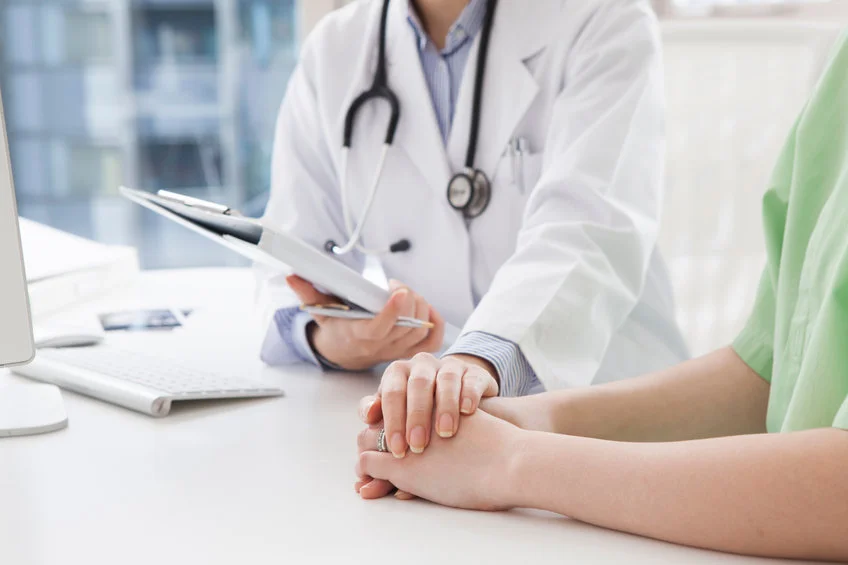
Tell your GP about any mole, freckle, or area of skin that's recently changed, and mention any personal or family history of skin cancer. They'll examine the affected area and may take a photograph to send to a specialist (dermatologist) for review, known as teledermatology. If skin cancer is suspected, you may get an urgent referral for further tests or a specialist opinion — this doesn't necessarily mean you have cancer.

The Excision Biopsy

A specialist will examine your skin, sometimes using a magnifying device, and ask about any changes you've noticed. They may cut out the mole and a small area of surrounding skin (an excision biopsy) to send for laboratory testing. Results are usually sent to your GP or the hospital within about two weeks, though it can occasionally take longer — this doesn't necessarily mean anything is wrong, and you can contact the hospital or GP for an update if you're anxious about waiting. A specialist will explain your results and what happens next; it can help to bring someone along for support.

Further Tests if Diagnosed

Being told you have melanoma can feel overwhelming. A team of specialists will care for you throughout, including a clinical nurse specialist as your main point of contact. If you're diagnosed, you'll usually need further tests, which may include a CT or MRI scan, tests to check if the cancer has spread to nearby lymph nodes, and blood tests — these help determine how deep the melanoma is and how far it's spread (the stage), guiding what treatment is needed. Melanoma Focus runs a free helpline staffed by specialist skin cancer nurses (0808 801 0777).

Page last reviewed: 6 March 2024  ·  Next review due: 6 March 2027
Melanoma treatment surgery radiotherapy immunotherapy
Melanoma · Treatment

Treatment Options

? 5 min readReviewed: March 2024

Surgery

Surgery is the main treatment for melanoma, especially when caught early, and may also be needed if the cancer has spread or returned after previous removal. This can include removing the melanoma with an area of surrounding healthy skin to lower the chance of it returning, removing swollen lymph glands if cancer has spread to them, or removing melanoma that's spread elsewhere in the body. If the melanoma is somewhere visible, such as the face, a plastic surgeon may carry out the procedure to help the area look as good as possible, and a skin graft — taking skin from elsewhere on the body — may be needed if a large area is removed.

Radiotherapy

Radiotherapy is sometimes used to shrink large melanomas and help control symptoms, with the number of sessions needed depending on the treatment area and whether other treatments are being used alongside it.

Targeted Medicines and Immunotherapy

Targeted medicines work by killing cancer cells or slowing their growth, while immunotherapy helps the immune system fight cancer directly. These are sometimes used for melanomas that can't be treated with surgery, or that have spread to lymph glands or elsewhere in the body — a sample is usually tested first to check for specific gene changes that help doctors judge whether this approach is likely to work.

Chemotherapy

Chemotherapy is sometimes used for advanced melanoma that's spread elsewhere in the body, though it tends to be less effective for melanoma than targeted medicines or immunotherapy, so it's usually considered when other treatments aren't suitable.

If the Cancer Can't Be Cured

If melanoma is diagnosed at an advanced stage, it may not be possible to cure it — in this situation, treatment aims to limit the cancer and its symptoms and help you live as well as possible for as long as possible. This news can be very difficult to take in, and you'll be referred to a palliative or symptom control team, who'll work with you to manage symptoms, keep you comfortable, and support you and your loved ones.

Page last reviewed: 6 March 2024  ·  Next review due: 6 March 2027
Melanoma support charities helplines
Melanoma · Help & Support

Getting Help and Support

? 4 min readReviewed: March 2024

Your Specialist Team

You and your loved ones will be supported throughout treatment by a team of specialists — your clinical nurse specialist, or another team member, can point you towards helpful local support services.

National Charities

Several UK charities offer information and support for anyone affected by melanoma. Melanoma Focus (melanomafocus.org, helpline 0808 801 0777) offers guidance for patients, carers and professionals. Melanoma UK (melanomauk.org.uk, helpline 0161 821 5657) supports anyone affected by melanoma. Cancer Research UK (cancerresearchuk.org, nurse helpline 0808 800 4040) offers a nurse helpline, an online chat forum, and information on clinical trials. Macmillan Cancer Support (macmillan.org.uk, helpline 0808 808 0000) offers a support line, an online melanoma forum, and help finding local services. Marie Curie (mariecurie.org.uk, helpline 0800 090 2309) provides care and support for anyone affected by a terminal illness, including an online community and patient services.

Page last reviewed: 6 March 2024  ·  Next review due: 6 March 2027