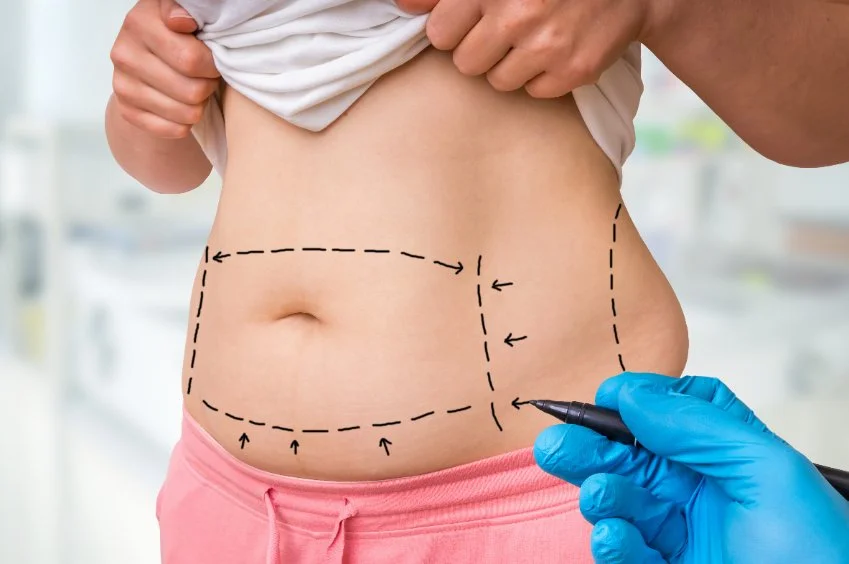
A tummy tuck, or abdominoplasty, is cosmetic surgery to improve the shape of the tummy
It can involve removing excess skin, fat and stretch marks, and tightening the abdominal muscles
It's aimed at removing loose skin that exercise alone can't shift, such as after pregnancy or major weight loss
It's not a treatment for losing weight, and is usually only recommended for people with a healthy BMI
It's not usually available on the NHS for cosmetic reasons
About Tummy Tucks
A tummy tuck, or abdominoplasty, is cosmetic surgery aimed at improving the shape of the abdomen, often by removing excess loose skin, fat and stretch marks, and tightening the abdominal muscles. It's typically used to address excess skin that can't be removed through exercise alone — for example, following pregnancy or significant weight loss.
It's not a quick fix for losing weight, and is usually only recommended for people with a healthy body mass index (BMI). As it's regarded as cosmetic surgery, it's not usually available on the NHS. If you're considering it, it's worth being clear about the cost involved and that it's major surgery with genuine risks to weigh up, taking time to reflect before deciding to go ahead.
Page last reviewed: 6 March 2024 · Next review due: 6 March 2027
Tummy Tuck · Procedure
What the Procedure Involves
? 4 min readReviewed: March 2024
Types of Procedure
There are two types of abdominoplasty, both usually carried out under general anaesthetic. A partial abdominoplasty involves a cut across the lower tummy, separating the skin from the abdominal wall below the belly button, removing excess fat and skin, then pulling together and stitching the remaining skin. A full abdominoplasty is more extensive, involving a cut from hip to hip just above the pubic area, a second cut to free the belly button, separating the skin from the abdominal wall, realigning the abdominal muscles, removing excess fat and skin, and repositioning the belly button through a newly cut opening.
The operation typically takes 2 to 5 hours, and most people stay in hospital for a few nights afterwards. You'll likely feel some pain on waking from the anaesthetic, which painkilling medicine can help manage, and you'll leave hospital with dressings and a pressure garment or tummy-control pants — someone will need to drive you home and stay with you for the first 24 hours.
Page last reviewed: 6 March 2024 · Next review due: 6 March 2027
Tummy Tuck · Recovery
Recovering from a Tummy Tuck
? 4 min readReviewed: March 2024
What to Expect
You'll typically need around 4 to 6 weeks off work and exercise, and won't be able to drive for a few weeks afterwards — your surgeon and insurance company can advise on timing. Full recovery, and the full visible effect of the procedure, generally takes around 6 weeks. You'll usually need to wear a special corset or tummy-control pants throughout this period to support healing and reduce swelling, taking things easy and keeping your knees bent while in bed to avoid straining your stitches.
A follow-up appointment after a few weeks will check your wound is healing properly, and after 6 weeks most people can stop wearing the corset and return to most usual activities.
Common Side Effects
You'll be left with a scar across your lower tummy, and around your belly button too if you had a full abdominoplasty. It's also common to find it difficult to stand up straight at first, feeling as though your tummy is being pulled — this improves over time — along with pain, bruising, numbness lasting from a few months to a couple of years, temporary fluid-filled swelling above the scar, and raised, red-looking scars that typically fade over 12 to 18 months.
Page last reviewed: 6 March 2024 · Next review due: 6 March 2027
Tummy Tuck · Risks
Risks and What Can Go Wrong
? 5 min readReviewed: March 2024
Possible Complications
Abdominoplasty can occasionally result in thick, obvious scars, bulges under the skin, "dog ears" (extra skin) at the edges of the scar, wounds failing to heal properly, a fluid collection at the operated site, bleeding under the skin (haematoma), numbness or pain in the tummy or down the leg, tummy cramps, or breathing problems. As with any operation, there's also a small general risk of excessive bleeding, blood clots, infection, or a rare allergic reaction to the anaesthetic. Occasionally, people find the desired result wasn't achieved and feel they need a further operation.
Choosing a Surgeon
In England, check that any clinic or hospital is registered with the Care Quality Commission (CQC), and that your surgeon is registered with the General Medical Council (GMC), checking their fitness-to-practise history. It's also worth asking how many of their procedures have led to complications, what follow-up is offered if something goes wrong, and their patient satisfaction rates.
If Something Goes Wrong
Contact the clinic where your operation took place as soon as possible if you have severe pain or unexpected symptoms. If you're unhappy with your results or believe the procedure wasn't carried out properly, raise this with your surgeon first. You can also contact the CQC with concerns about your care, or raise a concern about a doctor with the GMC if necessary.
Page last reviewed: 6 March 2024 · Next review due: 6 March 2027