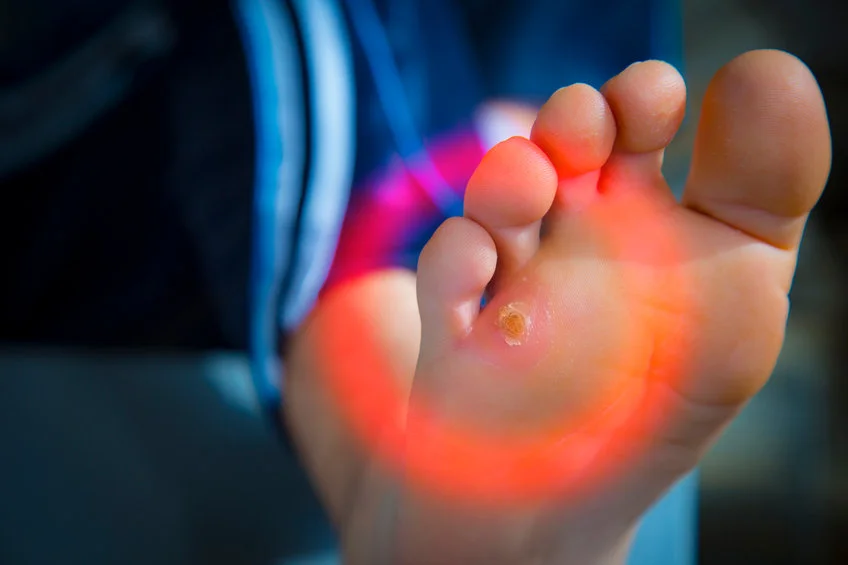
Warts and verrucas are small skin lumps that most people get at some point
They usually go away on their own, though this can take months or even years
Warts feel firm and rough; verrucas appear on the feet and can feel like standing on a needle
They're not harmful, though some people find them itchy, painful or embarrassing
Pharmacy treatments are available if a wart or verruca bothers you
About Warts and Verrucas
Warts and verrucas are small lumps on the skin that most people experience at some point in their life. They usually clear up on their own, though this can take months or even years. Warts feel firm and rough, and can appear on the palms, knuckles, knees and fingers — they're usually skin-coloured, though may look darker on black or brown skin. Verrucas appear on the feet, often with tiny black dots visible under the hard skin. Some warts are round, flat and yellowish (plane warts), and clusters spread over an area of skin are known as mosaic warts, common on the hands and feet.
Warts aren't harmful, though some people find them itchy, painful, or embarrassing, and verrucas in particular can be painful, sometimes feeling like standing on a needle. Treatment is worth considering if a wart or verruca is bothersome, keeps recurring, or is painful.
Pharmacy Treatments
Creams, plasters and sprays are available from pharmacies to treat warts and verrucas, though these can take up to 3 months to work fully, may irritate the skin, and don't always succeed — they shouldn't be used on the face. A pharmacist can advise on the most suitable option for you.
Page last reviewed: 6 March 2024 · Next review due: 6 March 2027
Warts & Verrucas · Treatment
GP and Specialist Treatment
? 5 min readReviewed: March 2024
When to See a GP
See a GP if you're worried about a growth on your skin, have a wart or verruca that keeps coming back, have a very large or painful one, notice a wart that bleeds or changes in appearance, or have a wart on your face or genitals. Genital warts specifically are treated at a sexual health or GUM clinic rather than through general wart treatment.
Freezing and Referral
A GP may be able to freeze a wart or verruca so it falls off within a few weeks, sometimes needing a few sessions — it's worth checking whether this is funded by the NHS in your area, since this can vary. If treatment hasn't worked, or the wart is on the face, you may be referred to a dermatologist. Large or very painful verrucas may be referred to a podiatrist instead.
Podiatrist Treatments
A podiatrist can offer stronger treatments than those available from a pharmacist, including cryotherapy (freezing the verruca with liquid nitrogen) or surgery to remove it using a scalpel or laser. You can also choose to see a podiatrist privately if you'd prefer.
Page last reviewed: 6 March 2024 · Next review due: 6 March 2027
Warts & Verrucas · Prevention
Stopping Them Spreading
? 4 min readReviewed: March 2024
How They Spread
Warts and verrucas are caused by a virus, which can spread to others through contaminated surfaces or close skin contact — you're more likely to pass one on if your skin is wet or damaged. It can take months for a wart or verruca to appear after contact with the virus, which can make it hard to know exactly when or where it was picked up.
Reducing the Risk of Spreading
Wash your hands after touching a wart or verruca, change socks daily if you have a verruca, cover warts and verrucas with a plaster when swimming, and take care not to nick a wart while shaving. Avoid sharing towels, flannels, socks or shoes with a wart or verruca, avoid biting your nails or sucking fingers with warts on them, avoid walking barefoot in public places if you have a verruca, and avoid scratching or picking at a wart.
Page last reviewed: 6 March 2024 · Next review due: 6 March 2027